For many when they hear ”screen time” they think time in front of a television, computer, tablet or smartphone. Screen time is generally thought to be a sedentary activity meaning very little energy is expanded in it’s usage.
Growing Together defines “screen time” differently. There are 2 types of screen time: “recreational” and “educational”.
All technology is not created equal and there is a true difference between recreational and educational usage. Unintentional time spent in front of a screen can get in the way of children exploring their surroundings, playing and interacting with peers, all of which are important for healthy minds and bodies. Ruling the use of technology out completely is not supporting a child in today’s world. At Growing Together, technology has the same place in the curriculum as any tool or piece of equipment that is used to support a child’s develop. It’s about using with intention to meet the needs of each child.
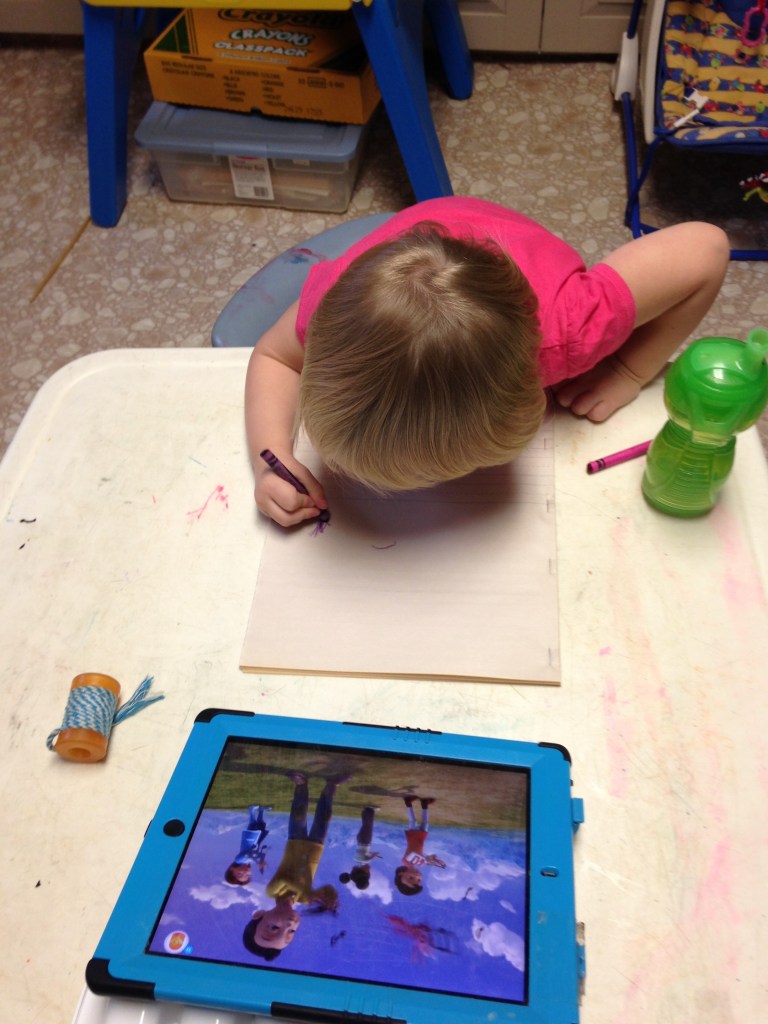
At Growing Together it is our intention to provide the children in care with opportunities to investigate the world around them with concrete, hands-on learning activities. To support this investigation, there will be usage of a variety of materials and tools, including today’s technology. Recreational viewing is limited, while educational viewing is intentionally integrated into the program. Screen time is not used as a filler, but is actively engaged in. Screen time is not used as a reward or to manage challenging behavior.
Usage of technology within Growing Together aligns with the joint position statement of the National Association for the Education of Young Children and the Fred Rogers Center for Early Learning and Children’s Media at Saint Vincent College.
- Above all, the use of technology tools and interactive media should not harm children.
- Professional judgment is required to determine if and when a specific use of technology or media is age appropriate, individually appropriate, and culturally and linguistically appropriate.
- Developmentally appropriate teaching practices must always guide the selection of any classroom materials, including technology and interactive media.
- Appropriate use of technology and media depends on the age, developmental level, needs, interests, linguistic background, and abilities of each child.
- When used appropriately, technology and media can enhance children’s cognitive and social abilities.
- Interactions with technology and media should be playful and support creativity, exploration, pretend play, active play, and outdoor activities
- Technology tools can help educators make and strengthen home–school connections.
- Digital citizenship is an important part of digital literacy for young children.
 Growing Together Child Care